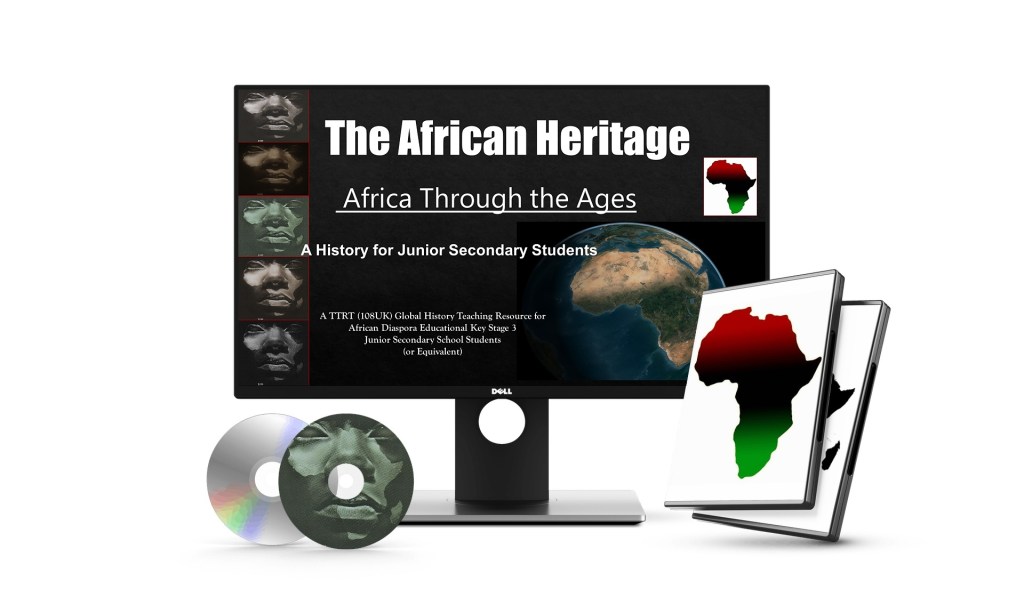
This TTRT Teaching Resource, “Africa Through The Ages“ is a Global History Resource for Lower Secondary School Students (UK KS3).
AVAILABLE AUTUMN 2025
In creating this Teaching Resource, we at TTRT have tried to achieve Three Main Objectives.

First, there is the Acknowledgements, Thanks and Appreciation for the numerous necessary Data, Links, Information and Materials received and utilised, and the Desire by Ourselves & Others involved, to faithfully and accurately transmit this Knowledge to Others and Future Generations
Secondly, we have made an attempt to address the need to provide a balanced, complete, analytical and comprehensive History of Africa through the Ages for Our Junior Secondary Students – (United Kingdom version – 2025 Edition)
Third, we have attempted to correct the distortions and myths of the Occidental or European-Centred Colonial History which in the past has been allowed to dominate our Academic Curriculum and Syllabi.
In short, we are offering an African View of the History of Africa and the Wider World.
—————————————————————
The Meaning of History
We begin this Resource by examining the Meaning of History; why it is necessary to know about the history of any society, and how we collect historical information. We hope this will enable our Junior Students to develop questioning minds, develop critical thinking tools, and to learn for themselves how to analyse the process of history.

After this, we proceed to examine the Historical Changes that occurred in Africa from the earliest people right up to the slave trade that came with the introduction of European Mercantile Capitalism. Mercantile Capitalism was the Colonial Expansion of trade, designed to increase the wealth of individuals and countries in Europe, which occurred between the sixteenth and the nineteenth centuries.
In our analysis, we look at regions of different parts of the African Continent. We take examples of particular societies and examine the main historical changes there in some depth. This is done in order to help the students to better understand the workings of the various societies of Africa long before the coming of Europeans. Not all the African regions are included here..
Certain examples were chosen to allow for clear examination of a cross-section of Africa. This has been done with the simple aim of showing and providing clear evidence that pre-colonial development in Africa was well-structured and produced some truly Great Civilisations.
African Development
The main theme of this Resource is pre-European-contact African Development.

Centuries before European Colonisation, Africans as they are now known, were involved in making their own History. They were inventive and adaptive people who domesticated crops and animals, invented tools and developed language. They successfully and progressively came to terms with their own environment. They developed mining and manufacturing to meet their own basic needs and to trade for other goods. Small societies grew into complex states. Culture and the arts flourished, alongside mechanical skills, ethical standards, courts of law, and so on.
All of this early development suffered a serious setback with the coming of Mercantile Capitalism and the Trans-Atlantic Slave Trade. The transportation of millions of able-bodied African men and women across the Atlantic Ocean had a extremely negative impact on their societies. Great civilisations and states in advanced stages of social development were destroyed. Healthy economic systems were shattered. This marked the beginning of a long phase of dependency and underdevelopment for African societies. The wealth from their resources and their labour was being taken overseas instead of being used for their own further development.
Historical Balance
The purpose of this Teaching Resource is not only to instil pride in our past, but to help us to better understand the present in order to make a better future. We can then try not to repeat the mistakes of the past, but to choose the better elements in building the future. Therefore, in compiling this Resource we are not just concerned with the good aspects of African Life before the coming of the Europeans and we do not seek to paint a perfect picture of African society in the Pre-European era..

While there was some degree of cooperation, we recognise that Africans sometimes fought one another (just as people did elsewhere) for control of the distribution of goods and for political control of weaker social groups. Social conflicts emerged, and it was largely because of this that European merchants were able to enslave millions of African men and women. In designing this Resource, we seek to provide a correct and balanced account of what actually happened in Africa from the time of the first known people right up until the point immediately preceding the Trans-Atlantic Slave Trade.
—————————————————————
How to Use this Teaching Resource
Teachers and students may find their National Curriculum too biased or otherwise inadequate, with the range of topics too broad and brief to be justly treated within the specific time-periods allotted. In order to ensure that you have a sound overall grasp of the main historical issues presented in this Teaching Resource, it may be worthwhile for you to give more time to certain chapters and less to others.

Section 1 is an essential introduction to the discipline of History. This chapter provides students with the opportunity to develop historical skills of research and analysis. They will learn how to find out why certain events occurred and what effect they had upon the society. They will learn how to apply this to the present, and how to put these skills into daily use.
Students should know how the African continent became the cradle of human civilisation and development. To this end, Sections 2 and 4 are very important because they show how early people learned to control their environment in order to meet their basic requirements. This knowledge provided the foundation for a more organised society which we are familiar with today.

Sections 5, 6, 8, 9 and 10 are essential reading since they give students knowledge in greater detail of how their ancestors were involved in the process of making history. These chapters show how strong centralised states developed in the southern African region, with complex political, economic and social systems.
It is also important to let students know that such development was not only occurring in Southern Africa. Sections 3, 7, 11, and 12, show that African people elsewhere on the continent were in the process of developing self-reliant societies. However, less time should be spent on these Sections. The students should have a general understanding of their historical importance rather than knowledge in detail. More detail can be taught if time permits.

Finally, the students need to know how Africa was gradually absorbed into the world capitalist system, and impact of this change on the existing social systems. Section 13 is of vital importance in this understanding. It shows how the coming of the Europeans and the slave trade in the sixteenth century marked the beginning of unequal development between Africa and the world capitalist system – a situation which has not really changed up until this day.
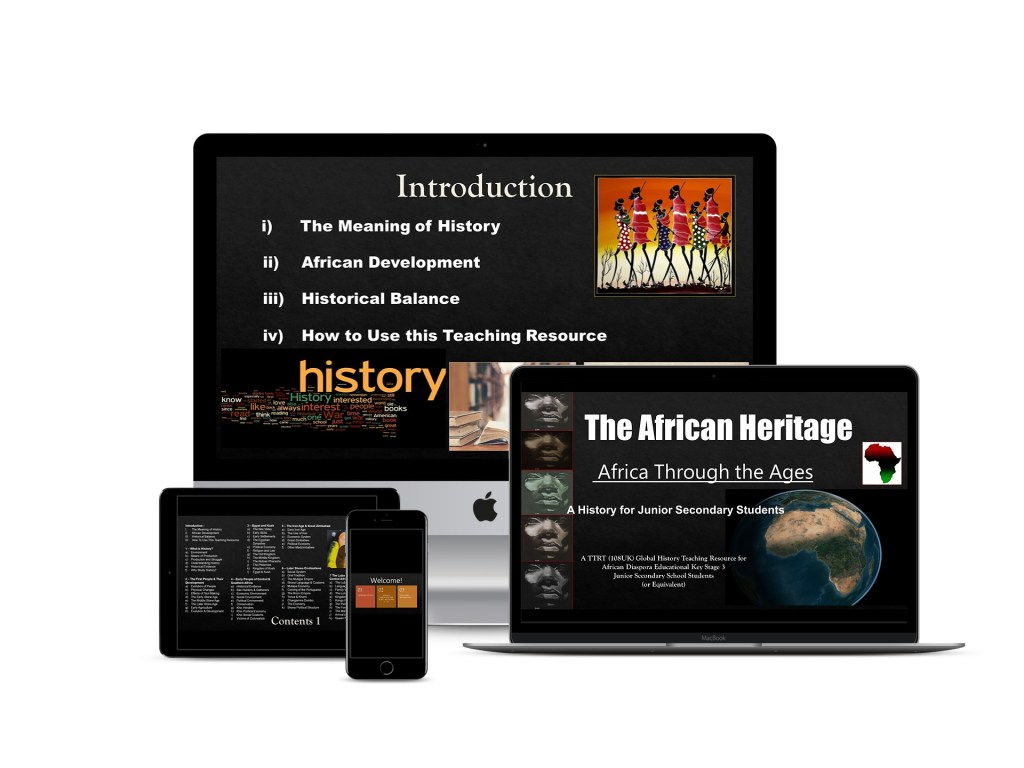
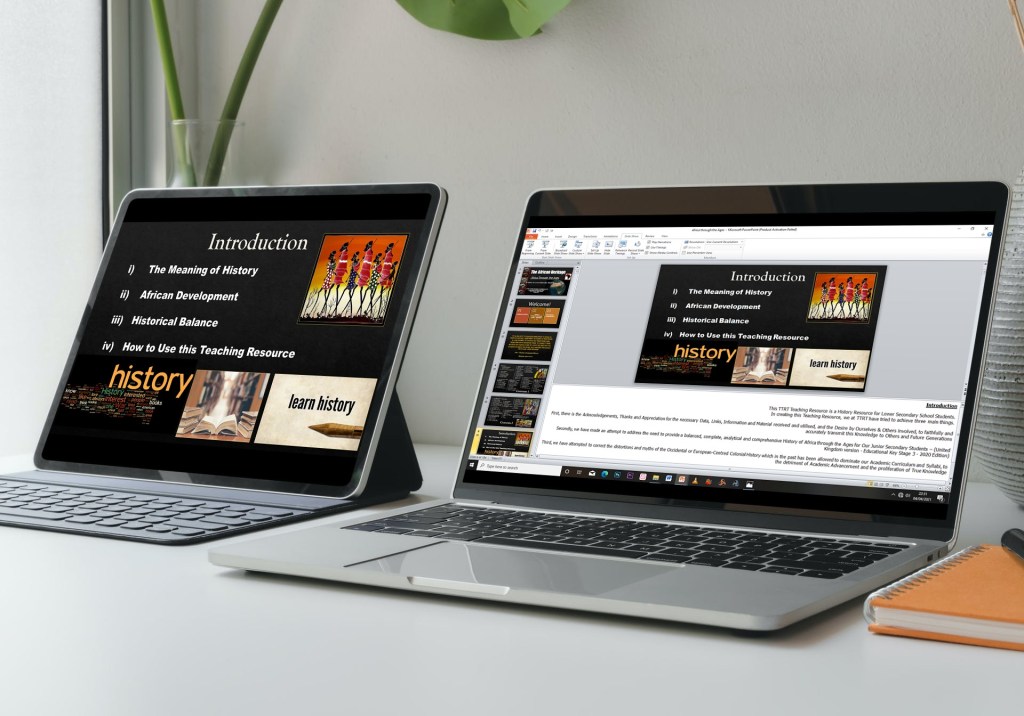
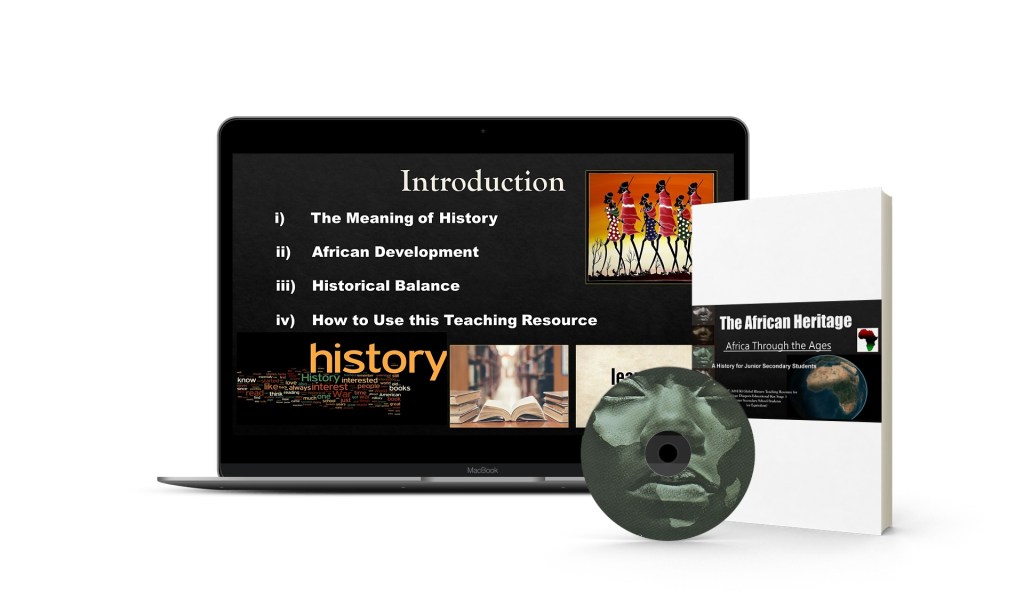
This TTRT Teaching Resource contains a Full-Colour Teachers Notes Handbook or Independent / Adult Study Edition Handbook, a Guided Student Booklet, and a fully inclusive Microsoft PowerPoint TTRT ATTA – “Africa Through The Ages” Package containing Full-Colour Slides for comprehensive interactive Digital Classroom, Remote or Online use.
Each Section also contains the Vocabulary, Questions, a Discussion Point and Project Work Tasks, collected together in the Guided Student Work Section.
Alternatively, this Resource can be purchased in either Independent / Adult Study and Home Study Edition Editions, allowing for an independent individual completion or a complete & comprehensive Home Study Experience for Student and Educators alike!
—————————————————————
This Resource is heavily based upon the work of previous Scholars and was designed to provide Educators and Students with a UK Key Stage 3 equivalent access point into Global History, via exploration of the Development of Human Civilisation within the continent called Africa, from the earliest records, up until the arrival of European explorers and the advent of mercantile capitalism.
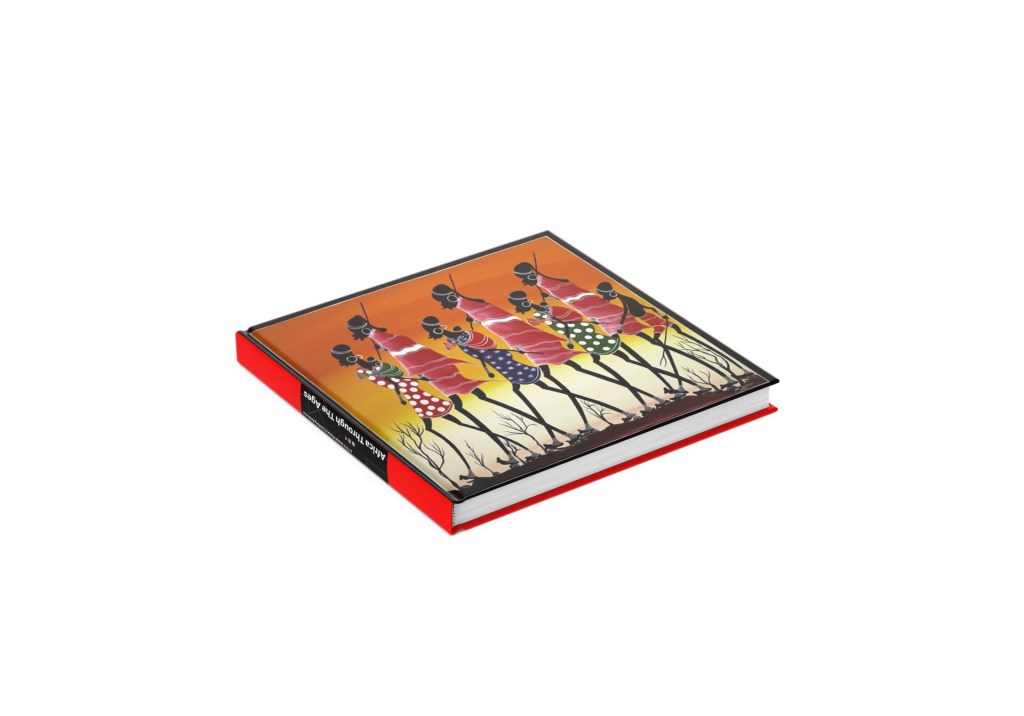
The TTRT Africa Through The Ages Global History Teaching Resource is available in the following Available Format Options:






—————————————————————
In the creation of this TTRT Teaching Resource, TTCT is heavily indebted to the following –
- Dr M. Sibanda, Dr H. Moyan, and S.D Gumbo of Zimbabwe
- (ZEB) Zimbabwe Educational Books (PVT) Ltd
- The Zimbabwe High Commission – London, UK
- All of My Life-Long Friends from All of the many, many, Peoples of the African Diaspora
—————————————————————
ATTA Promotional Product Examples












The Full range of The TTRT – Africa Through The Ages Promotional Products is available to view at the TTCT Full Product Katalouge
—————————————————————

